L’auditorium del Conservatorio
22nd Jun, 2015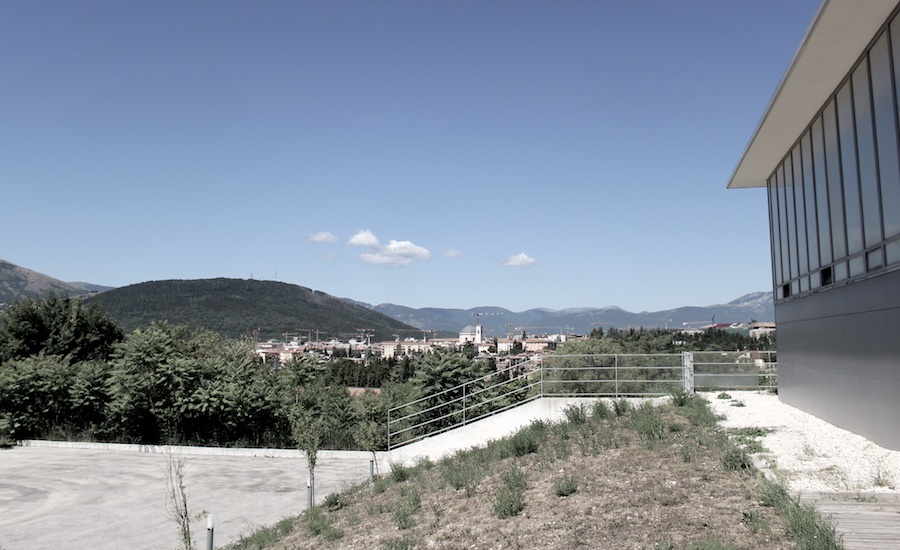
Visit to L'Aquila Conservatorio and the temporary auditorium, 22nd June 2015
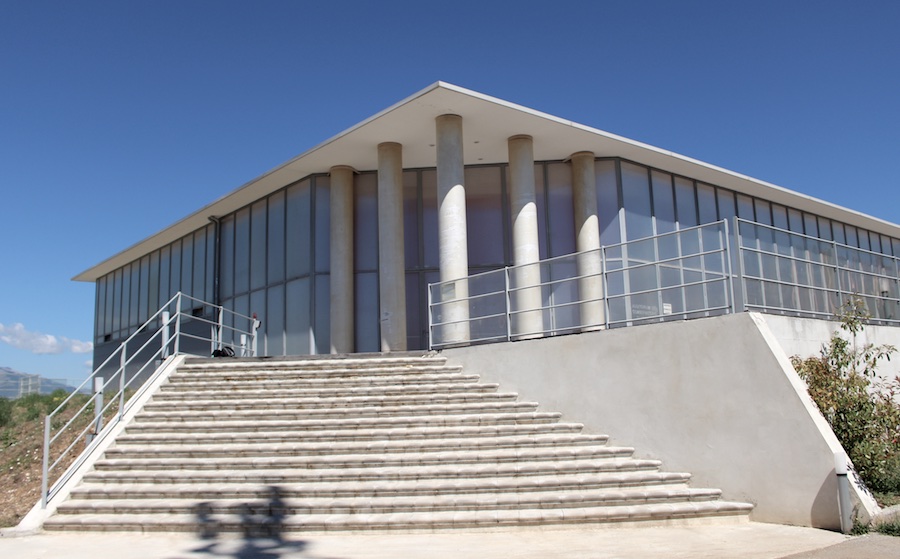
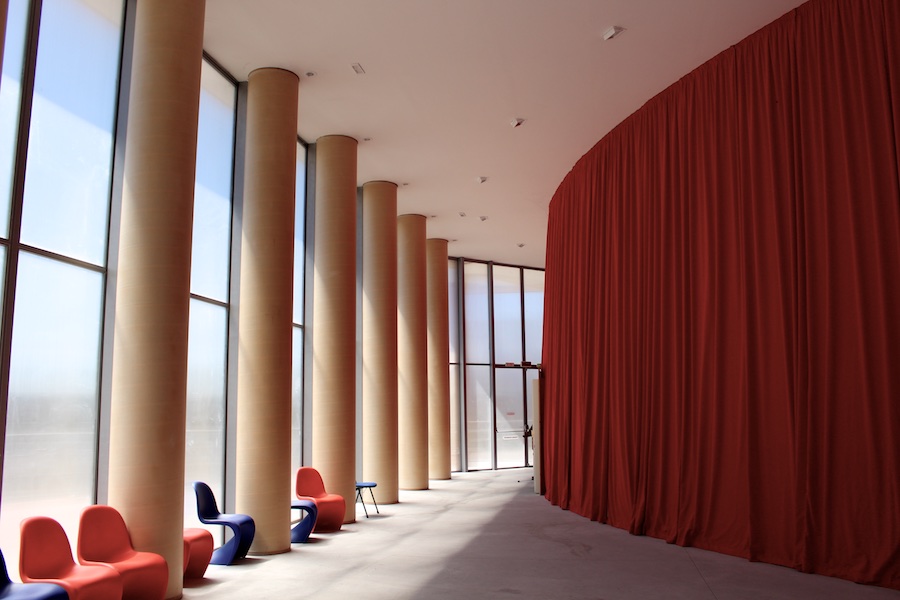
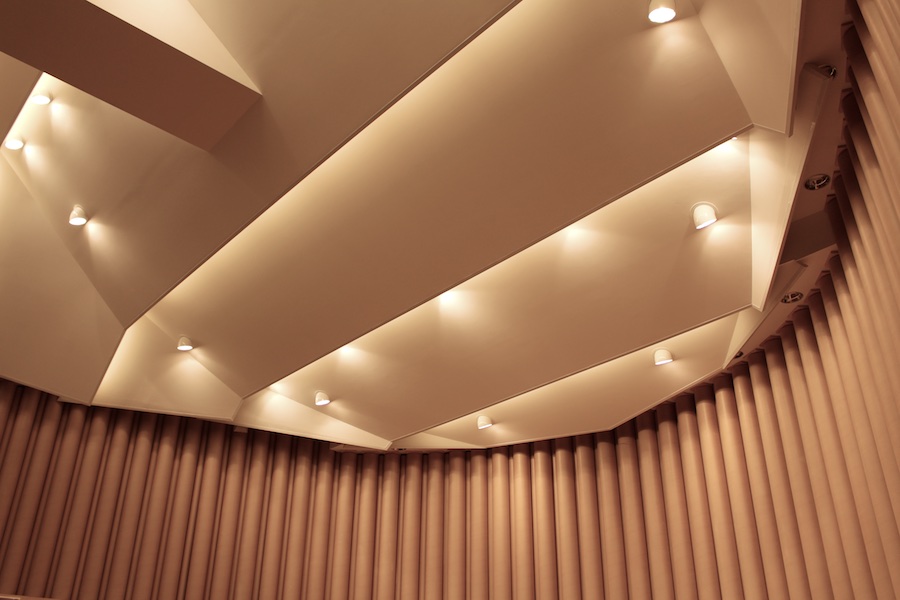
L'Aquila's Temporary Concert Hall was designed by Shigeru Ban as a post-earthquake regeneration scheme, and construction finished in 2011. It is also known as L'Aquila's Paper Concert Hall, because it utilises Ban's signature construction method - large cardboard tubes. In this case, these form the internal structure of a transparent box of folding doors. The auditorium is an elliptical space in the centre, lined internally by more cardboard tubes and externally by a heavy red curtain. Externally, the auditorium looks very tired and worn - perhaps reflecting its temporary construction materials and methods - but has a fantastic outlook over the historic city and mountains beyond.
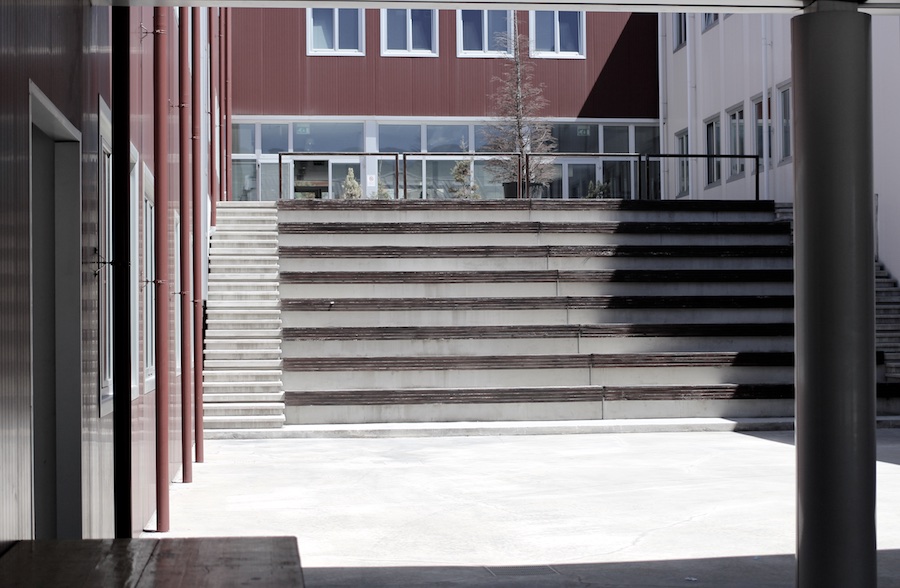
The concert hall was constructed behind L'Aquila's Conservatorio - the music school. The school building is part of the temporary, modular reconstruction developments which took place post-earthquake. These schemes were called MAP for housing and 'MUSP' (lavori per la fornitura e la posa in opera di moduli provvisori ad uso scolastico) for educational facilities. This particular MUSP development is in a prominent location on a hill overlooking L'Aquila's cemetery, just outside the historic city walls, and appears every well used and successful. Approaching the Conservatorio from the road, it entirely obscures the view of the Concert Hall, which is in fact (unintentionally) quite a well kept secret according to the local people.
The perception is that L'Auditorium is a private concert hall for exclusive use by the Conservatorio, rather than a public cultural facility. However, the original plans for the auditorium would have changed this impression entirely. As part of the 2009 G8 Summit in L'Aquila, Ban submitted plans for L'Auditorium project in a different location (although with the same construction materials) as a response to a request for tender by the Civil Defense Department. The 2009 plan revolved around the re-use of an existing abandoned structure outside the historic centre. As part of the (now shelved) plans for L'Aquila's tram network, a steel roof was constructed for the main tram terminal building, and the auditorium would exploit this abandoned structure. This plan exploited the undulating steel roof and structure, and the project would have been much more prominent - as well as significantly cheaper.